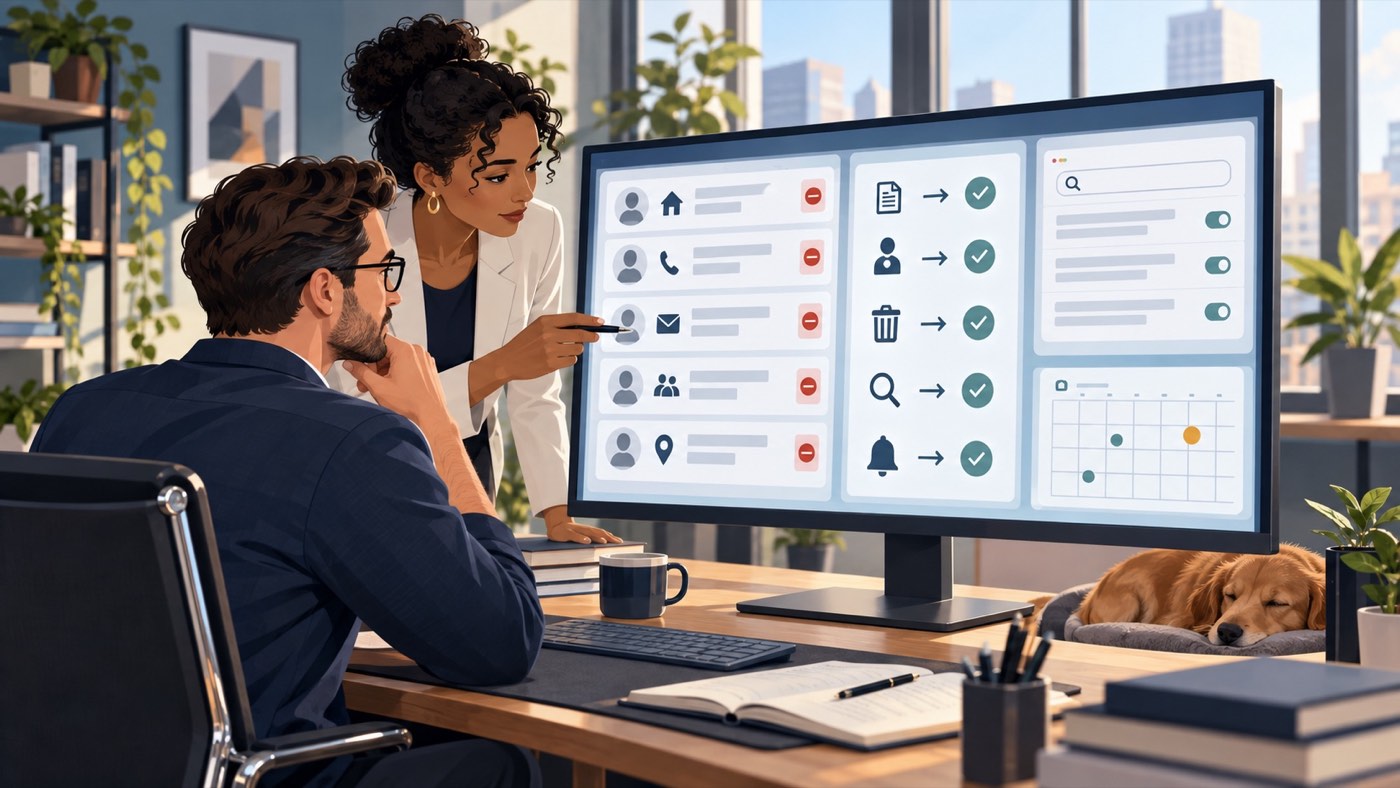
A VPN routes covered network traffic through a provider’s connection. It can be one part of a privacy plan, but it does not make every online action anonymous. It also does not remove public pages, erase account history, or prevent a website from recognizing an account you sign into.
01
Decide which problem you are solving
Separate network exposure from account security and public information exposure. The FTC explains that a VPN provider handles the traffic routed through its service, making the provider’s practices important. Evaluate ownership, data collection, retention, permissions, and security information rather than choosing only by a claim of complete anonymity.
- Identify the device and traffic the product actually covers.
- Review whether the provider shares or monetizes data.
- Check support and cancellation terms before committing.
02
Keep account and device protections
Example: using a VPN while signed into a social account does not make your published post private. The audience setting and the platform account still matter. Likewise, a VPN does not fix a reused password or an unpatched device. Maintain strong authentication, software updates, and careful handling of suspicious links alongside any network tool.
03
Address public exposure at its source
If your home address appears in a directory, changing your apparent network location does not change that directory. Record the publication and use the relevant correction or removal process. Review account privacy settings separately. A useful privacy plan assigns a specific action to each exposure instead of expecting one application to solve unrelated problems.
Frequently asked questions
Does a VPN remove my name from Google?
No. Search results reflect indexed content and the service’s rules. A VPN connection does not submit a removal request or change the underlying webpage.
Is a free VPN always unsafe?
Price alone does not establish safety. Examine the provider’s business model, permissions, data handling, and credible security information. Avoid unsupported promises regardless of whether the product is free or paid.
Continue with your next step
Related guides on this topic
Sources and policies
Check the current policy before submitting a request.
You do not have to figure out the next step alone.
Share the URLs and explain your concern. We will review the context and explain which options are worth assessing.
Request a confidential reviewOr call (307) 429-2531Educational information, not legal advice. Outcomes depend on the facts and decisions made by third parties.