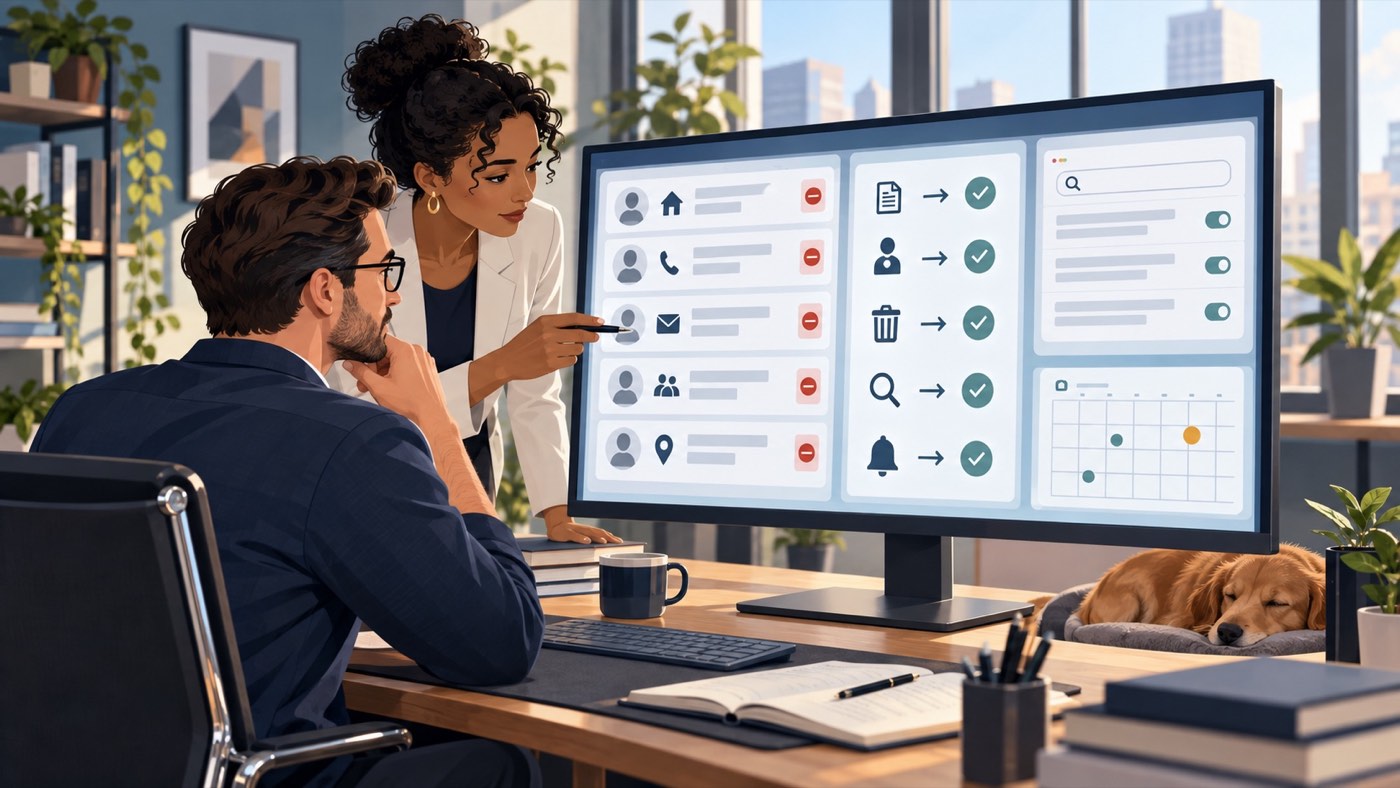
An executive privacy report should show what was reviewed, what information was found and what changed. Counts are useful only when their meaning is clear. Ten copies of one address are different from ten distinct sensitive facts, and a percentage reduction cannot be evaluated without a consistent baseline and review method.
01
Define the unit of measurement
Choose whether you count listings, domains, exposed data categories or confirmed cases. Keep those measures separate. Record the searches and time of review so another authorized reviewer can understand the scope. Do not describe a sample of common directories as a complete measurement of everything available about an executive online.
02
Distinguish actions from verified outcomes
A request sent is an activity; a public listing no longer visible is an observed result. The FTC notes that people-search data can reappear, so a result should include its verification date and next check. Record cases that cannot be confirmed instead of silently treating them as successful removals to improve the report's appearance.
- Specify which names, domains and data categories were reviewed.
- Keep duplicate listings separate from distinct exposed facts.
- Label pending, rejected and unverified cases accurately.
- Explain changes in scope before comparing reporting periods.
03
Example of a misleading improvement claim
A report says exposure fell by half after removing five of ten listings. If the remaining five contain the same sensitive address, the percentage says little about that address's availability. A better report explains which sources changed, which data remains discoverable and what follow-up is appropriate, without inventing a probability of personal harm.
Frequently asked questions
Can a privacy score predict whether someone will be attacked?
Not reliably without a validated method and relevant evidence. Use the score, if any, as a defined internal prioritization aid and explain its limits rather than presenting it as a safety forecast.
Should leadership receive all raw personal data?
Usually a concise category-level report is enough. Restrict detailed evidence to authorized reviewers so the reporting process does not create another widely circulated collection of sensitive information.
Continue with your next step
Related guides on this topic
Sources and policies
Check the current policy before submitting a request.
You do not have to figure out the next step alone.
Share the URLs and explain your concern. We will review the context and explain which options are worth assessing.
Request a confidential reviewOr call (307) 429-2531Educational information, not legal advice. Outcomes depend on the facts and decisions made by third parties.