Business Listings · August 15, 2026
How to Protect Your Google Business Profile From Unauthorized Access
Practical owner, manager, authentication, recovery, and vendor-access controls for a Google Business Profile.
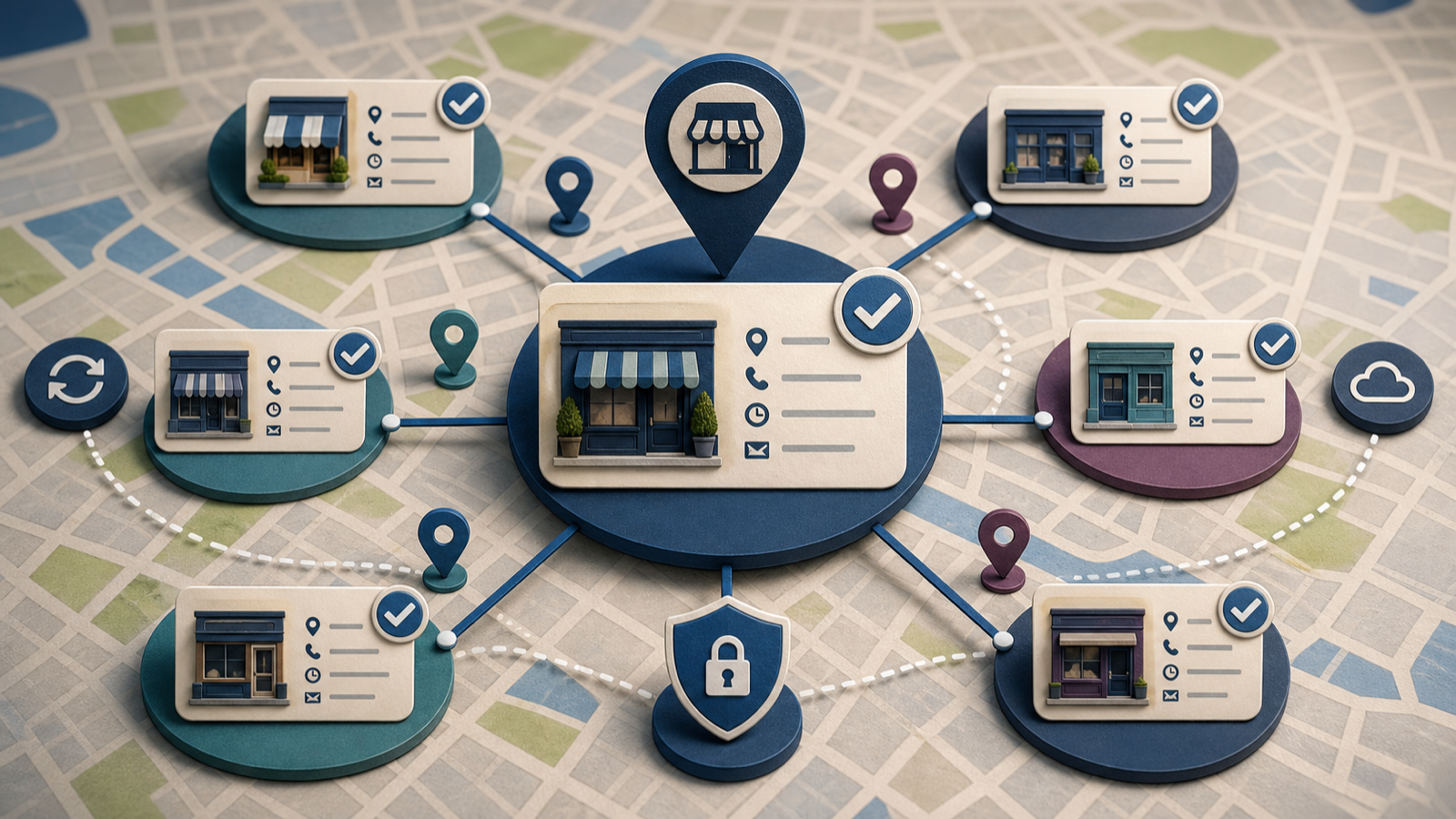
Use individual accounts, strong authentication, limited manager access, documented ownership, current recovery methods, and an immediate offboarding process.
Business listings help customers and digital systems understand who a company is, where it operates, and how to contact it. Inconsistent names, addresses, phone numbers, hours, categories, or ownership can confuse customers and weaken trust. Corrections should reflect the real business rather than add promotional keywords.
Review every owner and manager today and remove access that no longer has a business purpose. Maintain an access register, approval owner, addition date, role, and removal date. Give each person the lowest level of access needed and never share a common password.
A practical step-by-step approach
01Create a source-of-truth record
Write down the approved business name, address or service area, phone number, website, hours, categories, description, and ownership contacts. For this situation, review every owner and manager today and remove access that no longer has a business purpose.
02Secure the important accounts
Confirm owners and managers, remove outdated access, use individual accounts, enable strong authentication, and preserve recovery information.
03Audit priority platforms
Review Google, Apple Maps, Bing, Yelp, industry directories, social profiles, and major data providers. Focus first on listings customers actually use. A useful case record should reflect this topic specifically: maintain an access register, approval owner, addition date, role, and removal date.
04Correct one fact at a time
Submit truthful edits with supporting evidence when requested. Avoid repeated conflicting changes while a review is pending. The practical decision here is to give each person the lowest level of access needed and never share a common password.
05Resolve duplicates carefully
Verify which profile is authoritative before requesting a merge or removal. A rushed duplicate cleanup can affect reviews or visibility.
06Monitor after major changes
Recheck listings after a move, rebrand, ownership change, phone update, or holiday-hours change. Keep a log of submissions and decisions.
Information to gather
A clear record makes it easier to choose the right channel, communicate accurately, and avoid unnecessary repetition. Start with:
- Approved business identity sheet
- Owner and manager access list
- Screenshots of incorrect fields
- Supporting real-world documentation
- Priority-platform audit
- Correction log and recheck date
What not to do
Pressure can lead to decisions that create a second reputation problem. Avoid:
- Adding keywords that are not part of the real business name
- Creating multiple profiles for one eligible location
- Sharing one password among many workers
- Marking a legitimate competitor as closed
- Changing several critical fields without documentation
Frequently asked questions
Can a specific result be guaranteed?
No. Platforms, publishers, search engines, and AI providers make their own decisions. A responsible plan explains eligibility, evidence, options, dependencies, and realistic limits.
What should I save before taking action?
Maintain an access register, approval owner, addition date, role, and removal date.
Should I respond immediately?
Not always. Preserve the material and check the facts first. A quick response is useful only when it is accurate, authorized, proportionate, and unlikely to expose private information or intensify the problem.
When should I get professional help?
Consider experienced support when the issue is spreading, legally sensitive, connected to safety or privacy, affecting several platforms, confusing customers, or difficult to document and prioritize internally.
Primary resources
Policies and features can change. Review the current source before submitting a request: