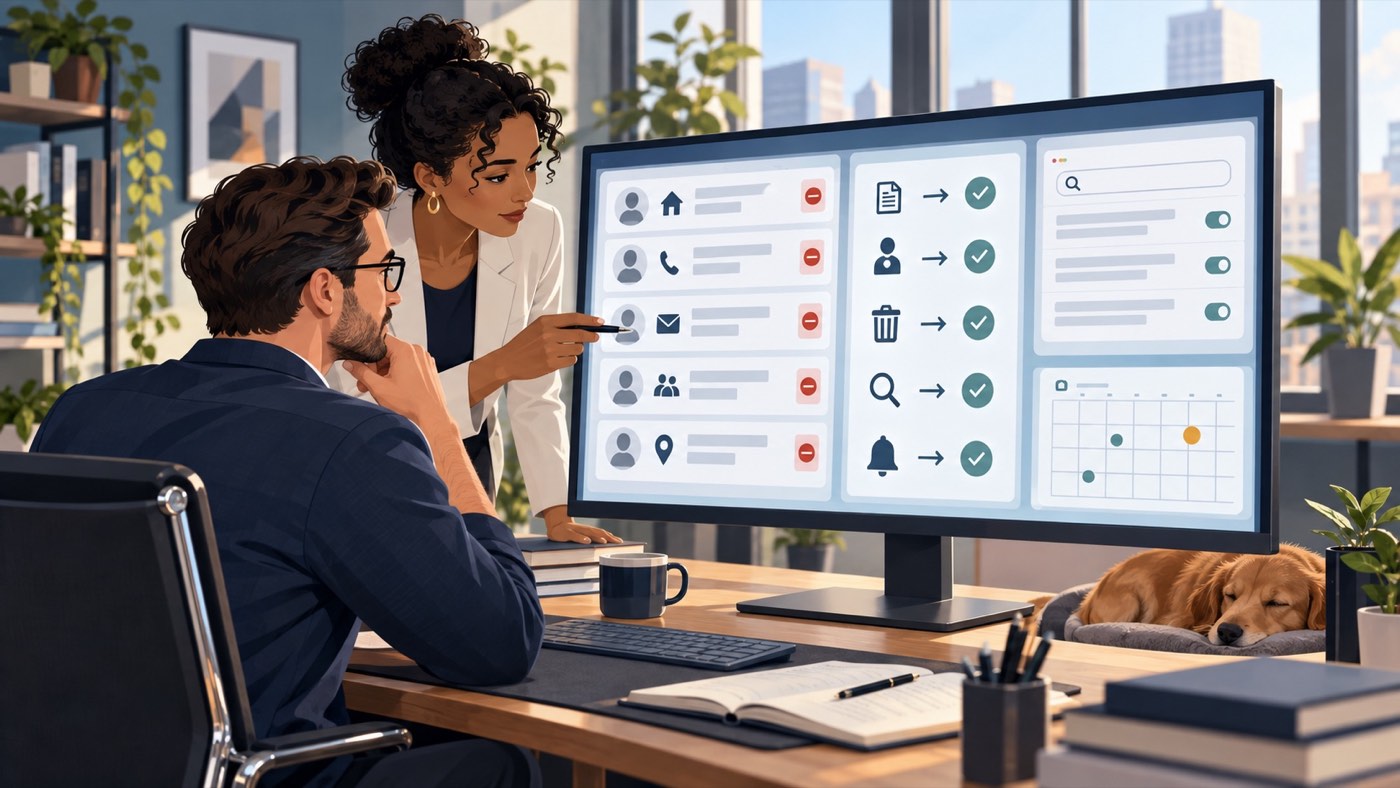
A defensive information audit examines what strangers can learn about you from publicly available material. Its purpose is to reduce unnecessary exposure and prepare sensible responses. Keep the review focused on yourself and people who have agreed to participate, rather than investigating others.
01
Look for combinations that reveal more
A single post may seem harmless while several posts reveal a routine, employer, or home location. CISA’s doxing guidance highlights the risks of aggregated personal information. Review your profiles as an outsider would, including public photos, biography links, old usernames, and documents you intentionally published. Do not bypass account restrictions or purchase questionable private data.
- Check whether photos show addresses, badges, or predictable schedules.
- Review links between professional and personal usernames.
- Note public directory entries that expose unnecessary contact details.
02
Prioritize realistic exposure
Example: a volunteer biography lists a personal phone number while the organization offers a shared contact address. Requesting that substitution may reduce exposure without removing the useful biography. Separate items you can change immediately from records controlled by another organization. Keep your audit private so it does not become a new collection of sensitive information.
03
Prepare for a harmful disclosure
Identify trusted support, platform reporting channels, and an appropriate contact at work or school. If threats appear, record basic context safely and consider local safety support. Changing settings during stalking or abuse may affect the situation, so plan changes with specialist help when needed. An audit is one protective step, not a guarantee that information cannot reappear.
Frequently asked questions
Should I search for the suspected person’s private details?
No. Retaliatory investigation can expose others and escalate harm. Focus on your safety, your accounts, and appropriate reporting routes.
Does deleting a post remove every copy?
No. Others may already have saved or republished it. Track known locations and request corrections or removal through each relevant service when appropriate.
Continue with your next step
Related guides on this topic
Sources and policies
Check the current policy before submitting a request.
You do not have to figure out the next step alone.
Share the URLs and explain your concern. We will review the context and explain which options are worth assessing.
Request a confidential reviewOr call (307) 429-2531Educational information, not legal advice. Outcomes depend on the facts and decisions made by third parties.